1800’s
Joseph Nicéphore Niépce
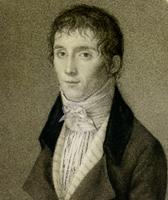
7 March 1765 – 5 July 1833),[1] commonly known or referred to simply as Nicéphore Niépce, was a French inventor, usually credited as the inventor of photography and a pioneer in that field.[2]Niépce developed heliography, a technique he used to create the world’s oldest surviving product of a photographic process: a print made from a photoengraved printing plate in 1825.[3] In 1826 or 1827, he used a primitive camera to produce the oldest surviving photograph of a real-world scene. Among Niépce’s other inventions was the Pyréolophore, the world’s first internal combustion engine, which he conceived, created, and developed with his older brother Claude Niépce.[4]
Daguerreotype
was the first publicly available photographic process, widely used during the 1840s and 1850s.
Invented by Louis-Jacques-Mandé Daguerre and introduced worldwide in 1839,[4][5][6] daguerreotype was almost completely superseded by 1860 with new, less expensive processes yielding more readily viewable images. There was a revival of daguerreotypy in the late 20th century by a small number of photographers interested in making artistic use of early photographic processes.
To make the image, a daguerrotypist would polish a sheet of silver-plated copper to a mirror finish, treat it with fumes that made its surface light sensitive, expose it in a camera for as long as was judged to be necessary, which could be as little as a few seconds for brightly sunlit subjects or much longer with less intense lighting; make the resulting latent image on it visible by fuming it with mercury vapor; remove its sensitivity to light by liquid chemical treatment, rinse and dry it, then seal the easily marred result behind glass in a protective enclosure.
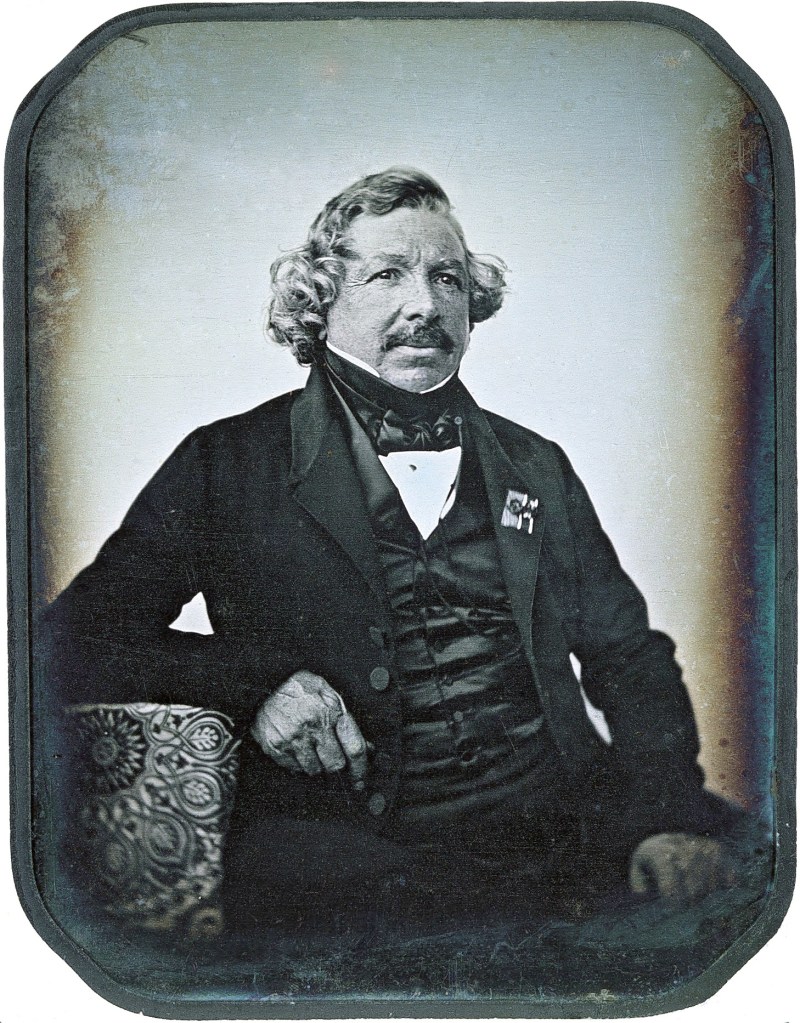
The image is on a mirror-like silver surface, normally kept under glass, and will appear either positive or negative, depending on the angle at which it is viewed, how it is lit and whether a light or dark background is being reflected in the metal. The darkest areas of the image are simply bare silver; lighter areas have a microscopically fine light-scattering texture. The surface is very delicate, and even the lightest wiping can permanently scuff it. Some tarnish around the edges is normal.
Several types of antique photographs, most often ambrotypes and tintypes, but sometimes even old prints on paper, are very commonly misidentified as daguerreotypes, especially if they are in the small, ornamented cases in which daguerreotypes made in the US and UK were usually housed. The name “daguerreotype” correctly refers only to one very specific image type and medium, the product of a process that was in wide use only from the early 1840s to the late 1850s.
Fox Talbot
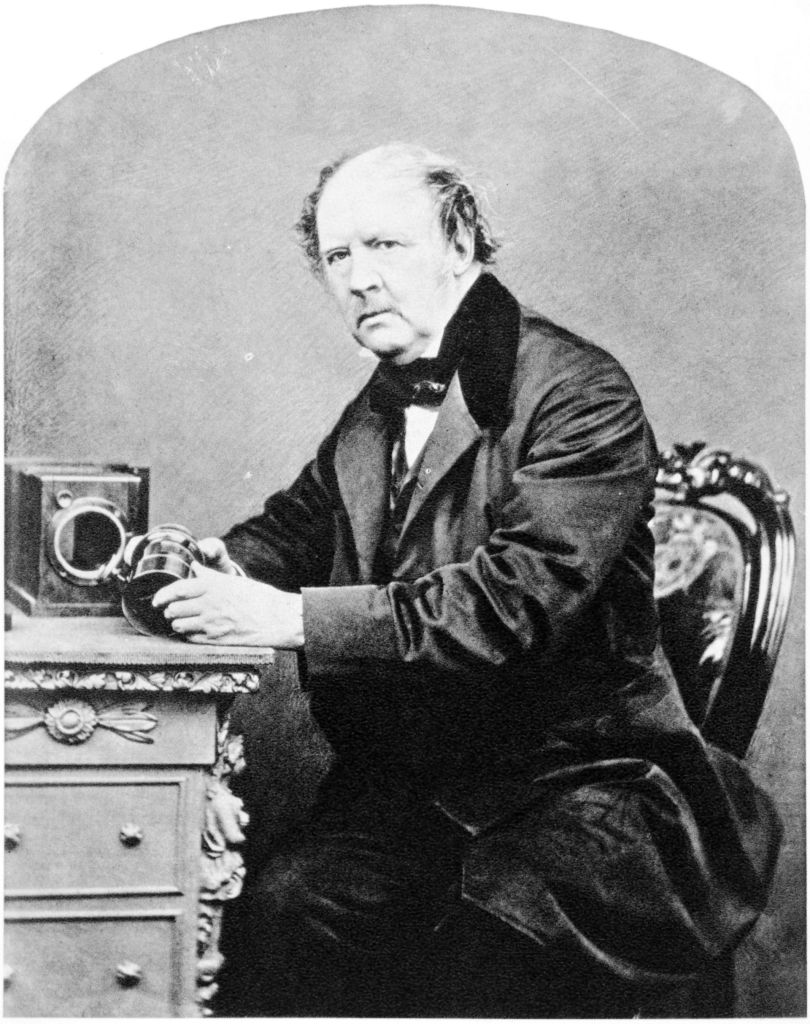
William Henry Fox Talbot FRS FRSE FRAS (/ˈtɔːlbət/; 11 February 1800 – 17 September 1877) was an English scientist, inventor and photography pioneer who invented the salted paper and calotype processes, precursors to photographic processes of the later 19th and 20th centuries. His work, in the 1840s on photomechanical reproduction, led to the creation of the photoglyphic engraving process, the precursor to photogravure. He was the holder of a controversial patent that affected the early development of commercial photography in Britain. He was also a noted photographer who contributed to the development of photography as an artistic medium. He published The Pencil of Nature (1844–46), which was illustrated with original salted paper prints from his calotype negatives, and made some important early photographs of Oxford, Paris, Reading, and York.[1]
A polymath, Talbot was elected to the Royal Society in 1831 for his work on the integral calculus, and researched in optics, chemistry, electricity and other subjects such as etymology and ancient history.
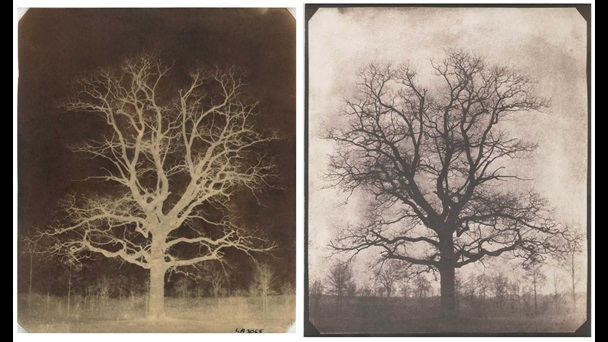
Fox Talbot-Negative Film Prints
 Ann
Ann 